
Smart EV Charging in Jacksonville: Load Management and TOU Scheduling
Categories: EV Charging, Smart Home Energy, Solar Power, Jacksonville FL
Tags: Smart EV Charging, Load Management, Time-of-Use, Solar EV Charging, Battery Storage
EVs are everywhere in Jacksonville now, and our homes are working harder than ever. Air conditioners, pool pumps, dehumidifiers, and electronics all pull power at the same time. If your EV charger just turns on at full speed whenever you plug in, it can waste money and put extra strain on your electrical system.
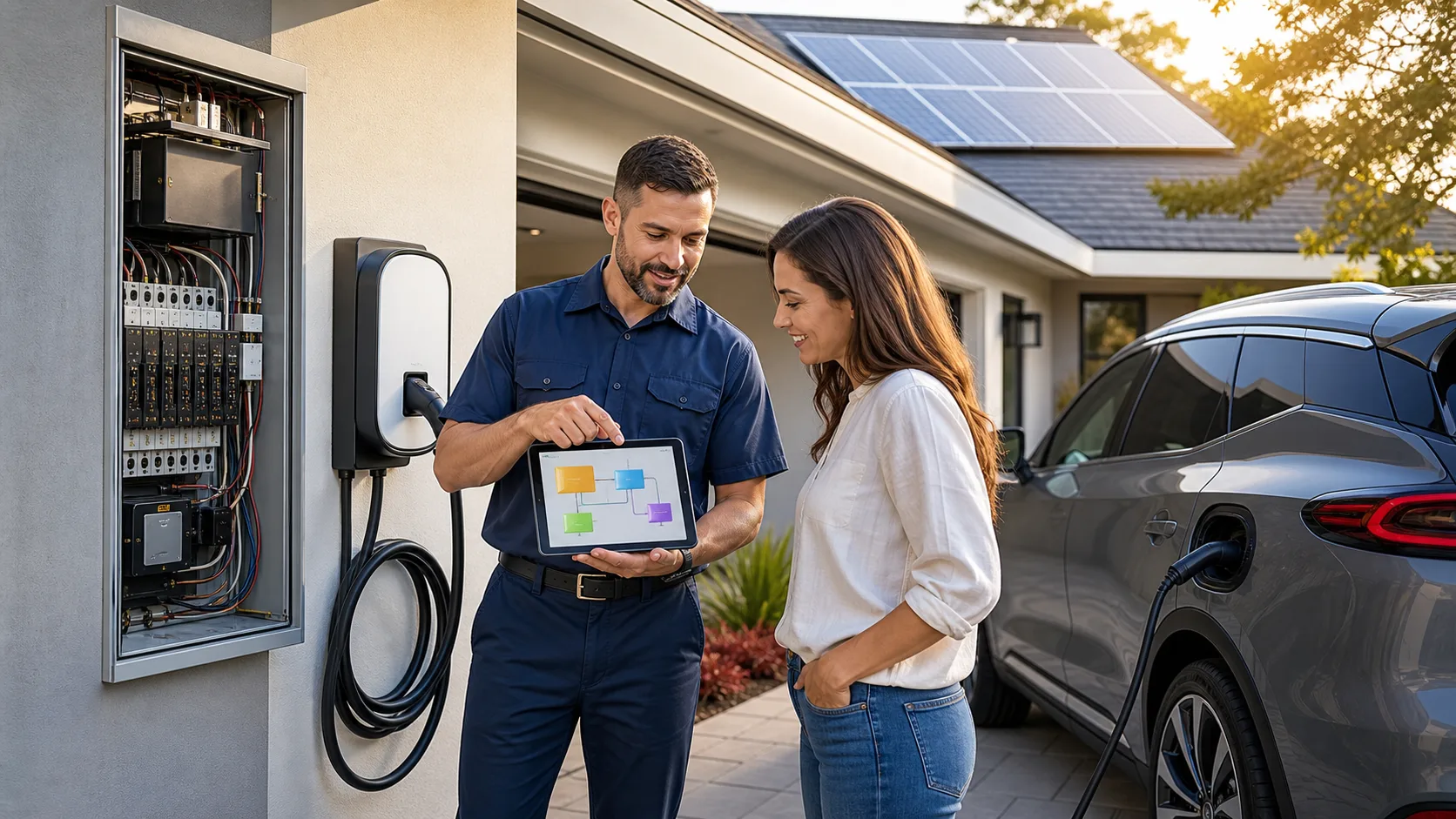
Smart EV charging flips that script. Instead of your car deciding on its own, smart charging lets your home and energy systems work together. Charging can shift to better times, slow down when your AC is running hard, and speed up when your solar panels are cranking out power. In this article, we will break down how that works in simple terms and how it can help you lower bills, protect your panel, get more from solar, and get ready for more EVs later.
Turn Your EV Charger Into a Money-Saving Power Tool
A basic or “dumb” charger only does one thing: it pushes as much power as your car will take until the battery is full. That might sound fine, but in a busy Jacksonville home it often means:
- Charging during the most expensive hours
- Stacking EV load on top of heavy AC use
- Pushing your electrical panel close to its limits
Smart EV charging adds brains to that process. In everyday language, that means:
- The charger can pick better times to run, like late at night
- Charging speed can go up or down as other loads change
- The system can talk to solar panels and batteries, not just the car
With smart controls, your EV becomes part of an overall energy plan instead of a random extra load. You get the chance to save money, keep your AC comfortable during hot afternoons, speed up the payback on solar, and build a setup that can handle another EV or future home upgrades.
Smarter EV Charging Starts with Load Management
Whole-home load management is like a traffic cop for your electrical panel. It watches how much power your home is using in real time. When big loads kick on, it tells the EV charger to slow down or pause so you do not overload the system.
In Jacksonville, that matters because many homes run:
- AC almost nonstop in the summer
- Pool pumps and sometimes heaters
- Dehumidifiers, dryers, ovens, and more
When an EV starts charging at full speed on top of all that, it can be the “straw that breaks the camel’s back.” Breakers can trip, and your panel may run closer to its maximum than it should.
There are a few levels of load management:
- Basic load-sharing between multiple EV chargers so two cars can share one circuit
- Advanced management that coordinates the EV with HVAC, water heaters, and pool pumps
- Full panel review, where a professional decides if smart controls are enough or if you truly need a panel upgrade
Smart load management must be installed and wired correctly, with the right breakers and permits. For any EV charging station installation in Jacksonville, it is important to work with a certified contractor that understands both residential and commercial code. Done right, smart management also helps with future additions like a second EV, a backyard office, or even an accessory dwelling, without tearing out everything and starting over.
Time-of-Use Scheduling That Cuts Your EV Fuel Costs
Time-of-use, or TOU, is a simple idea. Power is usually cheaper and easier on the grid during certain hours, often at night. If you can shift most of your EV charging to those lower-demand times, your “fuel cost” per mile can go down.
Smart chargers and apps can:
- Set preferred charging windows, like midnight to early morning
- Let you choose charge goals, like “reach 60 percent by 7 a.m., go to 100 percent only on off-peak days”
- Match your real life, like early school runs, trips to Naval Station Mayport, or flexible work hours
In Jacksonville’s long, hot summers, afternoon peak hours already carry heavy AC demand. When EVs also charge during that window, the grid feels it. Shifting charging to off-peak times helps keep the overall system more stable, which can help reduce pressure for future rate hikes.
When an EV charging station installation in Jacksonville is planned carefully, TOU planning is part of the conversation from the start. It is not just a plug on the wall. A good design looks at your rate plan, daily schedule, and energy goals, then programs chargers and related equipment so they run at the most economical times with little effort from you.
Maximizing Solar Power for Your EV in Florida Sunshine
A sunny Jacksonville day is a perfect chance to “fill up” your EV with your own rooftop power. Your driveway can act like a small fueling station, powered by the panels on your roof instead of a gas pump.
Solar-priority charging means the EV charger responds to your solar production:
- It ramps up when solar output is strong and home loads are lighter
- It slows down, or even pauses, when clouds roll in or when AC and appliances kick on
- It pushes you to use more of your own power instead of importing from the grid
Pete likes to say, “The price of sunshine remains zero regardless of what the electric company charges you.” That simple idea is at the heart of solar-optimized EV charging. When your system is set to favor solar whenever possible, you have some protection from future rate increases.
When Solar PV systems are designed, it helps to plan for EV charging too, especially when a family is thinking about a second EV. Late summer is a great time for this, because long daylight hours and strong sun can help offset the higher AC use if solar and charging are coordinated the right way.
Solar, Battery Storage, and EV Charging Working Together
The next step is putting everything together: solar panels, battery storage, and a smart EV charger that all talk to each other. In Northeast Florida, that kind of “smart energy ecosystem” really shines during storm season.
Some common battery and EV strategies include:
- Charging your EV overnight using a mix of off-peak grid power and stored solar from the day
- Keeping part of your battery reserved for backup during hurricane season while still allowing limited EV charging
- Setting priorities, like home essentials first, EV charging second, or the other way around depending on your needs
During a grid outage, a well-designed system can keep your EV charging at a reduced rate. That can give you enough range to get around town or even leave the area if gas stations are out of service. Having solar, batteries, and EV charging station installation in Jacksonville handled in an integrated way keeps design, permitting, inspections, and long-term service much simpler.
Frequently Asked Questions About Smart EV Charging in Jacksonville
How Much Does It Cost to Install a Smart EV Charger in Jacksonville?
The cost depends on your panel capacity, wiring distance, charger type, and whether you are adding solar or a battery. Simple installs are usually less complex, while whole-home smart systems with solar and storage are a bigger project. A site review is the best way to determine a precise estimate for your home and goals.
Do I Need a New Electrical Panel to Add an EV Charger?
Not always. Smart load management can often support EV charging without a full panel upgrade by sharing available capacity. An on-site assessment is the best way to see if your current panel is enough or if an upgrade is the safer, more flexible choice.
Can I Charge My EV Only with Solar Power?
In many setups, you can prioritize solar for EV charging during sunny hours. Most systems stay grid-connected so your EV can still charge at night or on cloudy days. A good design focuses on using as much solar as practical while still keeping charging convenient.
Will Smart EV Charging Really Lower My Electric Bill?
Smart charging can help lower your bill by shifting charging to lower-cost or lower-demand times, avoiding peak usage, and using more of your own solar power. Actual savings depend on your driving habits, rate plan, and equipment design, but many people see a clear difference over time.
Is it Better to Install Solar, a Battery, OR an EV Charger First?
It depends on what you need most right now. If you already own an EV and need home charging, the charger might come first. If your top goal is bill savings or more independence from the grid, starting with solar and possibly a battery can make more sense. Many homeowners benefit from a phased plan so solar, batteries, and EV charging all fit together as needs grow.
Get Started With Your Project Today
If you are ready to make charging at home easier and more efficient, our team can help you design and install the right solution for your property. As A1A Solar & Air, we handle everything from evaluating your electrical system to completing a safe, code-compliant install. Schedule your EV charging station installation in Jacksonville today so you can enjoy convenient, reliable charging without the hassle. We are here to answer your questions and get your project on the calendar.
